
After decades of voice and data services hinging on tiny chips you could swap with your fingertips, a radical shift is underway in mobile technology: the arrival of eSIM. Soldered invisibly inside most new high-end phones, this digital answer to the SIM card offers a glimpse of tech’s next evolutionary leap. Gone is the need for fiddly plastic trays. Today, switching carriers can be as simple as scanning a QR code. Manufacturers from Apple to Samsung are racing to adopt it, seeing opportunities to redesign, secure, and streamline smartphones for an increasingly connected world.
The global growth of eSIM technology signals not just a new standard for mobile phones, but a fundamental change in how devices, people, and services stay connected. As mobile operators, corporations, and travelers alike explore the benefits of virtual profile switching, dual-line convenience and IoT enhancements, the landscape is shifting fast. Yet, regional differences and adoption challenges remain. Here’s an expert look at why eSIM technology is set to redefine everything from phone upgrades to international roaming, workplace fleets to tomorrow’s connected cars.
If you want a faster, practice-focused explainer first, read our guide how an eSIM works, then come back here for the full picture.
- eSIM permanently replaces the removable SIM card, allowing phone users to switch carriers via software.
- Modern flagship devices like iPhone models now often exclude a physical SIM slot, relying solely on embedded SIM technology.
- Strong benefits: sleeker phone designs, enhanced security, dual-line usage, and simpler international travel without swapping SIM cards.
- Adoption varies globally: not all mobile operators offer full eSIM support yet.
- eSIM is essential for IoT, powering everything from smartwatches to connected vehicles.
- Device switches between single-line handsets can still be easier with a traditional SIM card, for now.
What is an eSIM?
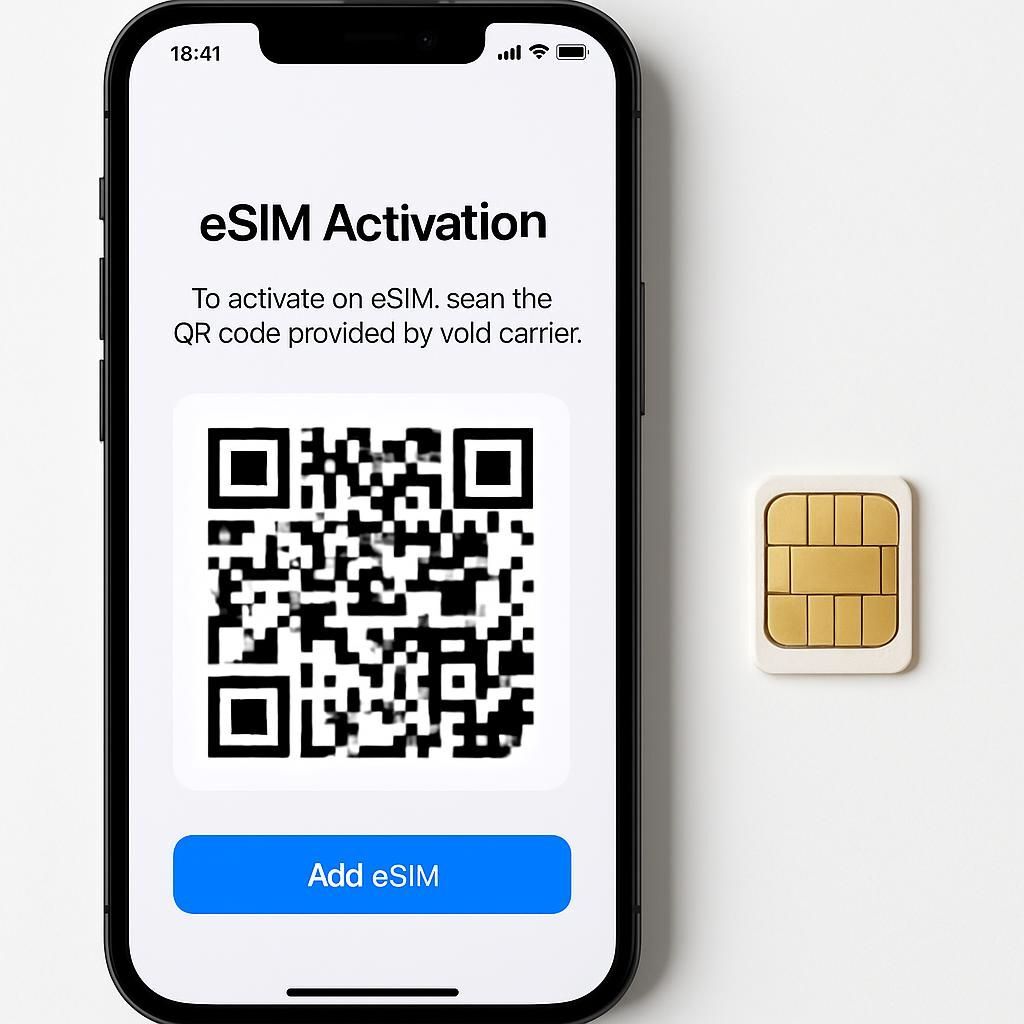
The journey to today’s eSIM-enabled phone started with a small, but powerful piece of plastic: the SIM card. Over the years, this component has not only transformed phones into globally connected devices, but also dictated how users interact with their carrier, data plan, and device identities. The evolution from the SIM card to eSIM encapsulates a broader shift toward seamless digital experiences. By embedding subscriber identity directly into the device via an onboard chip, eSIM fundamentally reimagines how mobile connectivity can work, reducing friction, saving space, and unlocking new possibilities for manufacturers and users alike.
Today, nearly all newly released iPhone, Apple, and Samsung flagship models come equipped with a built-in eSIM, leaving legacy tray-based approaches in the past. But what exactly changes when moving from the traditional SIM card to an integrated, programmable digital solution? For a travel-focused angle, our eSIM vs local SIM vs roaming comparison lays out when a travel eSIM wins over a plastic card or home-roaming.
Understanding traditional SIM cards: carrier identification and switching
For decades, the SIM card has been the backbone of modern telecommunications. This postage-stamp-sized chip contains the International Mobile Subscriber Identity (IMSI) and keys that authenticate your phone to your carrier’s network. Traditionally, swapping carriers or devices required physically removing the old card and inserting a new one. For millions, the tactile action of switching SIMs meant freedom to choose the best offer, roam locally, or fix a broken phone in minutes.
How physical SIM cards connect your phone to cellular networks
When you insert a SIM card into your phone, the device reads the data embedded within the chip to establish your identity on the mobile network. The SIM card acts as your key, unlocking services such as calls, texts, and data access. Carriers control access by programming these cards and linking them to your specific line. Over time, sizes shrunk from full-size to nano-SIM to save space within slim devices. But the core role (identification and authentication) remained largely unchanged for over two decades.
Limitations of physical SIM cards in modern devices
Physical SIM cards present several challenges as devices evolve. The necessity for dedicated slots and trays limits opportunities to reduce device thickness and complicates waterproofing efforts. In addition, every physical swap creates friction for phone owners: lost or damaged SIMs, shipping delays, or mismatched SIM sizes can make upgrades and repairs inconsistent. Security is also a concern; stolen or cloned SIMs expose users to potential fraud. These limitations set the stage for a new approach: eSIM technology.
| Characteristic | Physical SIM card | eSIM |
|---|---|---|
| Location | Removable slot/tray | Embedded on motherboard |
| Swapping | Physical removal/insert | Remote via QR code/software |
| Security | Can be lost or cloned | Harder to remove or duplicate |
| Device protection | Slot can compromise waterproofing | Better for sealed devices |
Introducing the eSIM: the embedded SIM revolution
Enter the eSIM, a revolution in the world of connectivity. Unlike traditional chips, the eSIM is an embedded, soldered module residing permanently within the phone or device. Instead of being a physical object swapped when required, it’s a reprogrammable component, able to store and update multiple carrier profiles on demand.
Core technical differences between eSIMs and physical SIMs
The essential transformation is the eSIM’s built-in, programmable architecture. Rather than inserting a SIM card, users receive a QR code from their carrier or access an app for activation, a process handled entirely through software. Once provisioned, the eSIM can be rewritten or swapped to new carriers remotely, allowing for unprecedented flexibility and reducing reliance on logistics or physical distribution. Step-by-step help: how to activate an eSIM.
eSIM activation: the role of QR codes and remote provisioning
For most consumers, activating an eSIM is intuitive: point your phone camera at a carrier-provided QR code, follow on-screen prompts, and the carrier profile downloads directly to your embedded chip. This remote provisioning capability is a major leap forward, enabling users to sign up for plans, switch carriers, or travel internationally, often without ever setting foot in a shop or handling a single piece of plastic. Efficiency, security, and environmental impact all stand to benefit as eSIM adoption widens.
Key advantages of eSIM technology for modern smartphones
The rise of eSIM is not just a tale of technological convenience; it reshapes the very design and capabilities of flagship mobile devices. By removing the need for removable trays, eSIM allows for sleeker, more feature-rich phones, while adding robust security, seamless profile management, and multi-line support. Leading brands like Apple and Samsung now leverage these benefits to innovate device design and user experience.
Space-saving design and enhanced device features
Eliminating the physical card slot has a ripple effect throughout a phone’s design. The tiny but persistent tray has long constrained engineers striving to maximize internal space. With the eSIM, those boundaries are pushed further. The result: thinner phone bodies, fewer ingress points, and even space for larger batteries or improved internals.
How eSIM enables thinner and more water-resistant phones
Consider the latest iPhone and premium devices in 2026: slimmer than ever, with edge-to-edge screens, and improved IP68 ratings. Thanks to eSIM technology, manufacturers can seal devices more tightly against dust and liquids, reducing potential points of failure from legacy card slots. For active users or those in wet environments, this translates to tangible peace of mind. For Apple-specific details, see iPhone eSIM compatibility (2026 guide).
Supporting multiple carrier profiles on one device
The days of juggling separate handsets or dual-SIM gadgets are ending. With eSIM, one phone can store profiles for several carriers, activated by a few taps. Users can maintain personal and business lines, or add short-term travel data, without ever inserting a new SIM card. This versatility is especially transformative for digital nomads, business travelers, or families consolidating devices, and pairs well with our eSIM for digital nomads and remote work overview.
- One eSIM can support multiple phone lines, with no tray swapping needed.
- Travelers add local data plans remotely, making global roaming easier; compare plans by destination on eSIMPlanet.
- Enterprises manage eSIMs across thousands of mobile devices from a central dashboard.
Security enhancements and simplified carrier switching
Beyond hardware, the eSIM experience is also safer and simpler. Embedding the identification directly into your device removes opportunities for cloning or theft, while digital provisioning means faster, streamlined carrier changes, without waiting for mail or risking SIM misplacement.
Why eSIMs are more secure against cloning and removal
Traditional SIM card fraud typically involves physically acquiring or duplicating a chip. The eSIM mitigates this threat by being neither removable nor easily tampered with. Profile data is protected by advanced cryptographic security, reducing your risk of spoofing attacks and unauthorized access even if the phone is lost.
Managing multiple cellular lines without physical SIM changes
Switching carriers or lines becomes a purely digital affair. Need to shift from personal to business use? Activate a different line remotely on your iPhone, without tracking tiny cards or making shop visits. Businesses especially benefit, as IT teams can manage and update plans in bulk with minimal disruption to daily operations.
Practical use cases: who benefits most from using an eSIM?
While eSIM has obvious headline appeal in tech circles, its real value shines in practical, everyday scenarios. From globe-trotting adventurers to busy corporate managers, embedded SIM technology unlocks flexibility and ease long sought after by mobile users.
eSIM for international travelers and local carrier access
Imagine Alice, a freelance photographer from Berlin, preparing for a whirlwind tour across Asia. With her iPhone equipped with eSIM, she simply scans a local carrier’s QR code upon arrival at each destination, instantly adding a data plan fit for local rates and coverage. No need to hunt down shops, change SIMs, or risk misplacing her primary line. For destination picks and prices, start from our travel eSIM hub and the country list.
Adding local plans without physical SIM cards
The global traveler’s pocket just got lighter. eSIM enables instant activation of local operators, reducing roaming costs and enabling faster connectivity when landing in a new country. By stacking temporary data plans within the same phone, frequent flyers and business people stay connected to their home and host countries at once.
Cost and convenience benefits for frequent flyers
Beyond the ease of installation, eSIM often brings cost savings. Virtual plans can be activated for only the needed period, eliminating waste and confusion over expiring or unused cards. Travelers enjoy better rates, reduced downtime, and always-on connectivity regardless of where work or adventure takes them. Before you checkout, you can also browse verified eSIM promo codes for partner discounts.
| Travel need | Physical SIM solution | eSIM solution |
|---|---|---|
| Switching to local operator | Purchase/remove SIM card | Remote eSIM activation |
| Retaining home number | Multiple phone/SIM juggling | Dual-line eSIM profile |
| Loss or damage risk | Higher (physical loss) | Very low (embedded chip) |
Personal and corporate use: dual lines and remote device management
The eSIM story also resonates for both individuals and enterprises. Having dual numbers (perhaps one for family, one for work) used to mean carrying two devices or fiddling with stacks of plastic. Now, switching is seamless and fully digital.
Separating work and personal phone lines on one device
Modern professionals, from consultants to delivery drivers, frequently blend work and personal communication on the same phone. With eSIM, switching between lines is as simple as selecting a profile, keeping contacts and billing distinct. iPhone users can enjoy the freedom of unified hardware, segmented by purpose.
Corporate deployment and remote updating of mobile plans
For IT administrators managing company phones, eSIM offers a dream scenario: remote provisioning, instant line swaps, and mass deployment. When assigning new iPhones or tablets, everything can be managed via the cloud, with profiles added or updated in real time. This reduces downtime and the logistics headaches tied to physical inventory.
Challenges and limitations of eSIM adoption worldwide
Despite clear efficiency and design gains, eSIM adoption across continents remains an ongoing process. Not every user or carrier, or situation, benefits equally from a purely digital approach.
Issues with device switching and physical SIM convenience
For some, especially those who regularly jump between phones for testing, repair, or upgrades, the eSIM process isn’t always seamless. While profile transfer is possible, it typically requires interaction with carrier systems and device setup, slowing down quick hardware swaps.
Why frequent single-line device transfers can be inconvenient
If you’re the kind of user who swaps a single number between a work and personal phone each day, the physical SIM card remains unmatched for instant slot-and-go use. Without a removable card, eSIM users must deactivate on one phone and reactivate on another, sometimes requiring carrier approval or extra steps.
Physical SIM cards still preferred for instant upgrades and repairs
Retailers and consumers alike report that for urgent upgrades or device breakdowns, the classic SIM card wins on speed. Pop it out, insert in replacement unit, and be talking in seconds. As a result, many see eSIM as ideal for stable ownership but still rely on traditional cards for “hot swaps” during emergencies or temporary exchanges.
Market barriers: carrier support and global adoption rates
While Apple and Samsung champion eSIM, actual experience still varies by provider and country. Many leading U.S. and European carriers now offer eSIM plans, but smaller, regional, or developing-market operators may lag in compatibility or availability.
Inconsistent or slow eSIM support among some operators
It’s not yet one-size-fits-all: inconsistent eSIM support from certain global carriers can leave travelers or early adopters looking for alternatives. Activation may be blocked or less intuitive outside mature markets, often requiring multiple support calls or manual steps.
Geographical variations in eSIM availability
Regional regulations, legacy infrastructure, and competitive factors all play a role in the global eSIM landscape. In 2026, while North America, much of Europe, and parts of Asia enjoy full eSIM integration, many countries are still rolling out basic compatibility or training support teams to handle digital provisioning. As with every major tech transition, a period of uneven access remains before global standardization is achieved.
Unsure whether your handset supports it? Use our phone compatibility checker or the full list of eSIM-compatible phones.
The future of eSIM: market trends, technology, and IoT integration
As eSIM technology matures, it’s rapidly escaping the confines of mobile phones and reshaping countless industries. The wave is visible far beyond just the iPhone, spanning smartwatches, laptops, vehicles, and the broader arena of the Internet of Things (IoT).
Expanding eSIM support in smartphones and connected devices
In the flagship world, Apple set a trend by removing physical SIM slots entirely in some iPhone 14 and later U.S. models, an overt nod to the future of embedded connectivity. By following suit, major players ramp up carrier pressure to scale support and accelerate eSIM rollout across their networks.
Flagship devices embracing eSIM and eliminating physical slots
Today, retail shelves feature top-of-the-range iPhone and Samsung devices with only an eSIM slot (or eSIM-only SKUs). As a testimony to confidence in digital provisioning, these launches mark the beginning of the end for physical cards, enabling even sleeker, more water-resistant devices for all users. Android-specific setup patterns are covered in Samsung Galaxy eSIM.
Beyond phones: tablets, smartwatches, laptops, and cars
The impact extends far beyond mobile phones. Wearables like the Apple Watch, always-connected tablets, and next-gen laptops now routinely ship with eSIM onboard, supporting truly mobile productivity. Connected cars leverage eSIM to offer built-in 4G/5G services, fleet management, and safety features, signaling a future in which virtually every device is instantly network-ready.
Technical insights: remote provisioning, security, and new use cases
Global operators now invest in cloud platforms that provision, manage, and update eSIM profiles securely. Using advanced encryption, the risk of interception or unauthorized activation is minimized. This digital mastery lets carriers push updates, reset lost devices, or reissue numbers, all without physical interaction or shipping delays.
How mobile operators manage eSIM profiles securely
Every eSIM profile operates as a secure, digitally signed credential on your phone. Carriers use rigorous cryptographic techniques for profile delivery, storage, and remote revocation, ensuring security is improved, not sacrificed, in the migration away from the physical card era.
Enabling connected cars, smart homes, and wearable tech
The next horizon for eSIM: massive-scale IoT. Smart thermostats, security systems, and wearables all benefit from remote provisioning and no physical insertion. Connected cars, in particular, can be pre-equipped at the factory; drivers simply select a service by scanning a code or tapping a screen, turning brand-new vehicles into instantly connected, intelligent machines.
Frequently asked questions
How do I activate an eSIM on my iPhone?
Most modern iPhones allow eSIM activation by scanning a carrier-provided QR code within the phone’s Settings app. Simply select “Add Cellular Plan” and follow the prompts. No physical SIM card needed. Full walkthrough: how to activate an eSIM.
Can I use two phone numbers with eSIM on the same device?
Yes, many phones with eSIM technology, including recent iPhone models, let you maintain multiple carrier profiles simultaneously. This enables separate work and personal numbers, or international and local plans on a single device.
What happens if I change phones? Can I transfer my eSIM?
You can transfer an eSIM profile to a new phone by deactivating it on your current device and reactivating it on the new one, usually by scanning a QR code provided by your carrier. However, this process varies by mobile operator and region.
Are all carriers worldwide supporting eSIM?
While eSIM adoption is growing rapidly, not all carriers currently support eSIM technology or offer digital activation. Always check with your provider, especially when traveling internationally or using less common operators.
What devices beyond smartphones use eSIM?
eSIM is now found in tablets, smartwatches, connected cars, laptops, and an expanding range of IoT devices. Brands like Apple and Samsung are leading the way in embedding eSIM chips across their product lines.
Next steps on eSIMPlanet: compare destinations · check compatibility · best travel eSIM guide · promo codes

Developer and digital nomad, I lived between Canada and the United States before continuing to explore the world. After struggling with internet connectivity abroad one too many times, I created eSIMPlanet to compare plans clearly and honestly. Every article is carefully written and reviewed to save you time and money.
